
Repairs on a working plant take more planning than their size suggests. This guide is drawn from a talk our sister company Firetech (UK) Limited gave to the PFPNet conference in October 2025, from the point of view of the contractor who has to carry the repair out.
Why repairs come up
- Accidental damage: impact, scaffold strikes and dropped tools.
- Planned removal, to inspect the steel by non-destructive testing or to allow hot works.
- Poor workmanship when the fire protection was first installed.
- Weather exposure, and corrosion of the steel under the coating.
What makes a repair hard
Three kinds of repair
Promat guidance sorts repairs into three types, and the method differs for each.
- Major damage and cut-outs, where the coating is rebuilt down to the steel.
- Missed areas, completed once an obstruction has been removed.
- Cracks, treated differently depending on whether they are hairline or over 1 mm wide.
The method for each is set out in our guide to inspection, maintenance and repair.
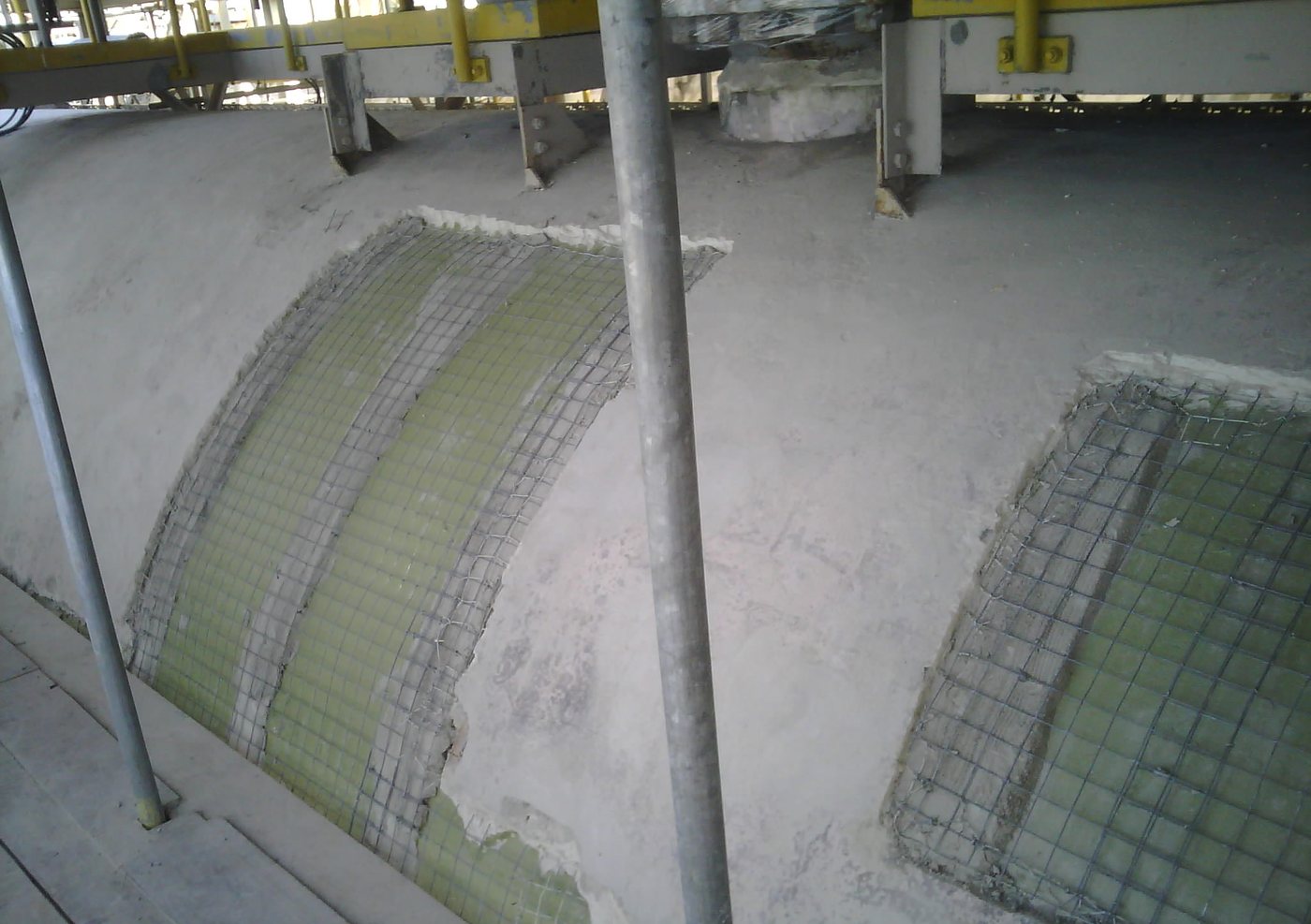
Cut-outs for inspection
- Mark out the area and cut at a 45 degree angle, folding the mesh back so it can be tied in again.
- If the opening will be left for any time, protect the exposed edges with a temporary topcoat.
- Reinstate in the original order: primer, mesh, then Fendolite-MII or Fendolite-TG.
- Keep a full record with photographs.
Detailing
- Slope the tops so water sheds. Avoid flat surfaces.
- Seal every termination with mastic.
- Overlap the mesh properly, and avoid more than three layers at any overlap.
- Avoid boxed protection unless drainage is built in.
Corrosion under fire protection is caused by water getting behind it, through poor detailing or failed seals. A Fendolite system that is applied and sealed correctly performs for decades.
Prevention
- Use trained, recognised applicators.
- Insist on proper detailing and sealing from the first day.
- Inspect every year and repair small defects before they grow.
- Involve the contractor early, so the design can be built and maintained.
We supply Fendolite-MII, Fendolite-TG, PSK-101, mesh and Topcoat 200 for repairs. Firetech (UK) Limited carries out repair work as a licensed Fendolite applicator.