
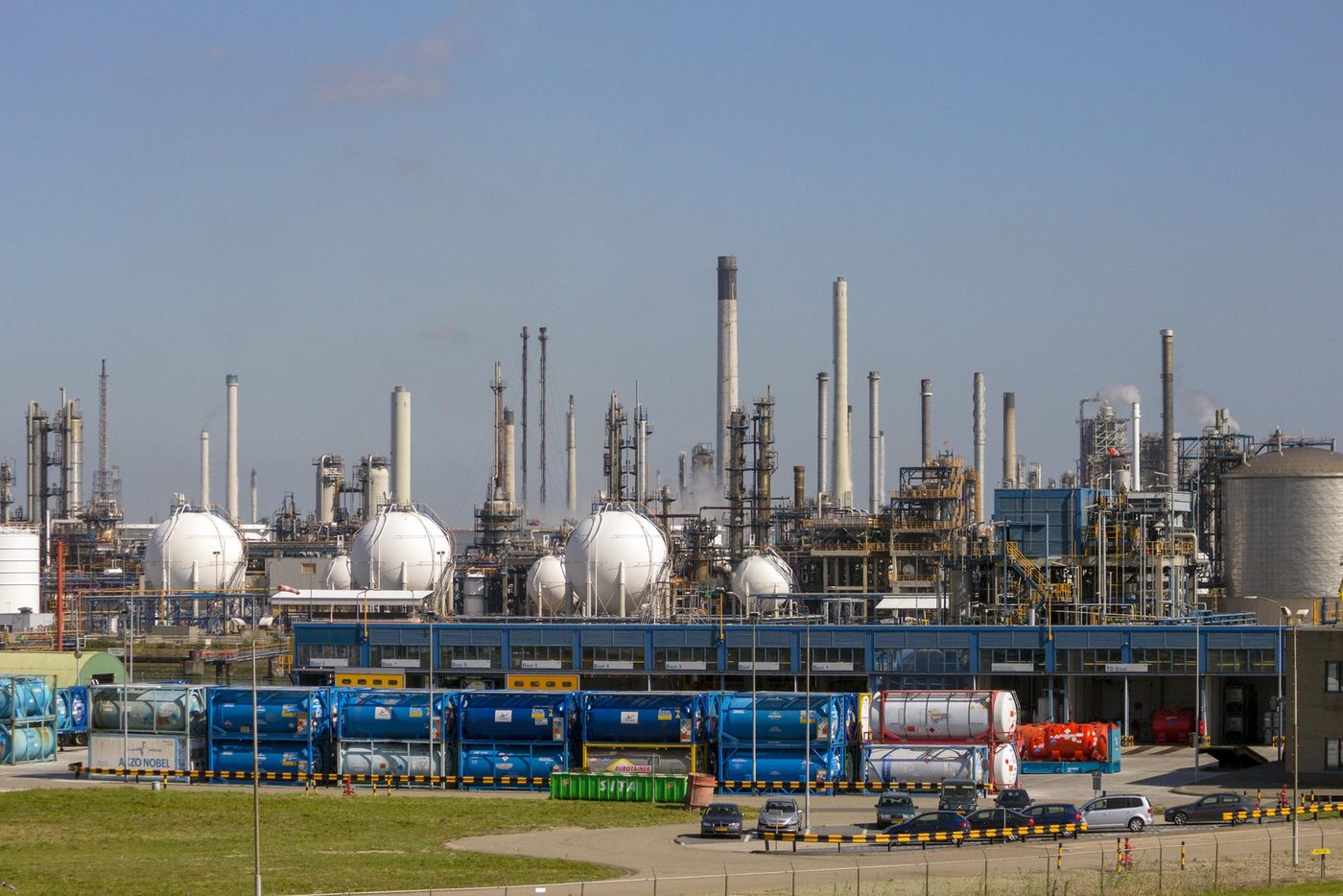
Fendolite-MII is used in the petrochemical industry to protect structural steel, storage vessels, vessel skirts and saddle supports, for up to 240 minutes of hydrocarbon fire protection.
Environmental exposure: UL 2431
UL 2431 tests whether a fire protection material keeps its performance after long exposure to the elements. Samples are aged and then fire tested against unaged controls. Promat report that Fendolite-MII was the first cementitious fire protection spray to pass the full series, including the optional solvent spray.
- UV, heat and high humidity, cycled for seven months
- High speed air erosion at 96 km/h
- Salt spray for 90 days
- Wet, freeze and dry cycling between -40°C and +60°C, repeated twelve times
- An industrial atmosphere of carbon dioxide and sulphur dioxide for 30 days
- Solvent spray
- Impact from a 0.5 kg steel ball dropped 6 metres
- Vibration
The standard allows the fire resistance to fall by up to 15 per cent after exposure. For Fendolite-MII the largest fall was 3 per cent, and on average there was none. The samples were tested without mesh and without a topcoat, which is the hardest case.
Blast
In December 2012 DNV GL tested steel sections protected with Fendolite-MII in an explosion chamber at Spadeadam. After a first blast averaging 2.08 barg there was little or no visible damage. After a second averaging 3.24 barg, three of the five sections showed little or none.
Three sections were then put through jet fire tests, lasting 66, 90 and 132 minutes.
Corrosion under fireproofing
Corrosion under fire protection comes from water getting behind it, which is a matter of detailing and upkeep. Promat's guidance is to slope top surfaces, seal every termination and joint with mastic, apply a topcoat where water shedding is in doubt, and inspect regularly. Fendolite-MII has been in use since the 1980s, and correctly installed and maintained systems have been found in good condition after decades.